
First personal care routines: how to support your child as they grow up
Compagnon
Between 8 and 12, the body changes. A simple three-moment routine helps your child take care of themselves, on their own and with pride.
One day, you notice the bathroom door stays shut a little longer. That your child lingers in front of the mirror. Or that they come home from sport with a smell that wasn't there last year.
Between 8 and 12, the body starts to change, and the bathroom changes with it. It's the right time to set up a first personal care routine. Not a matter of products or rules, but a way of teaching them to take care of themselves, on their own, and to feel proud of it.
Why now is the right time
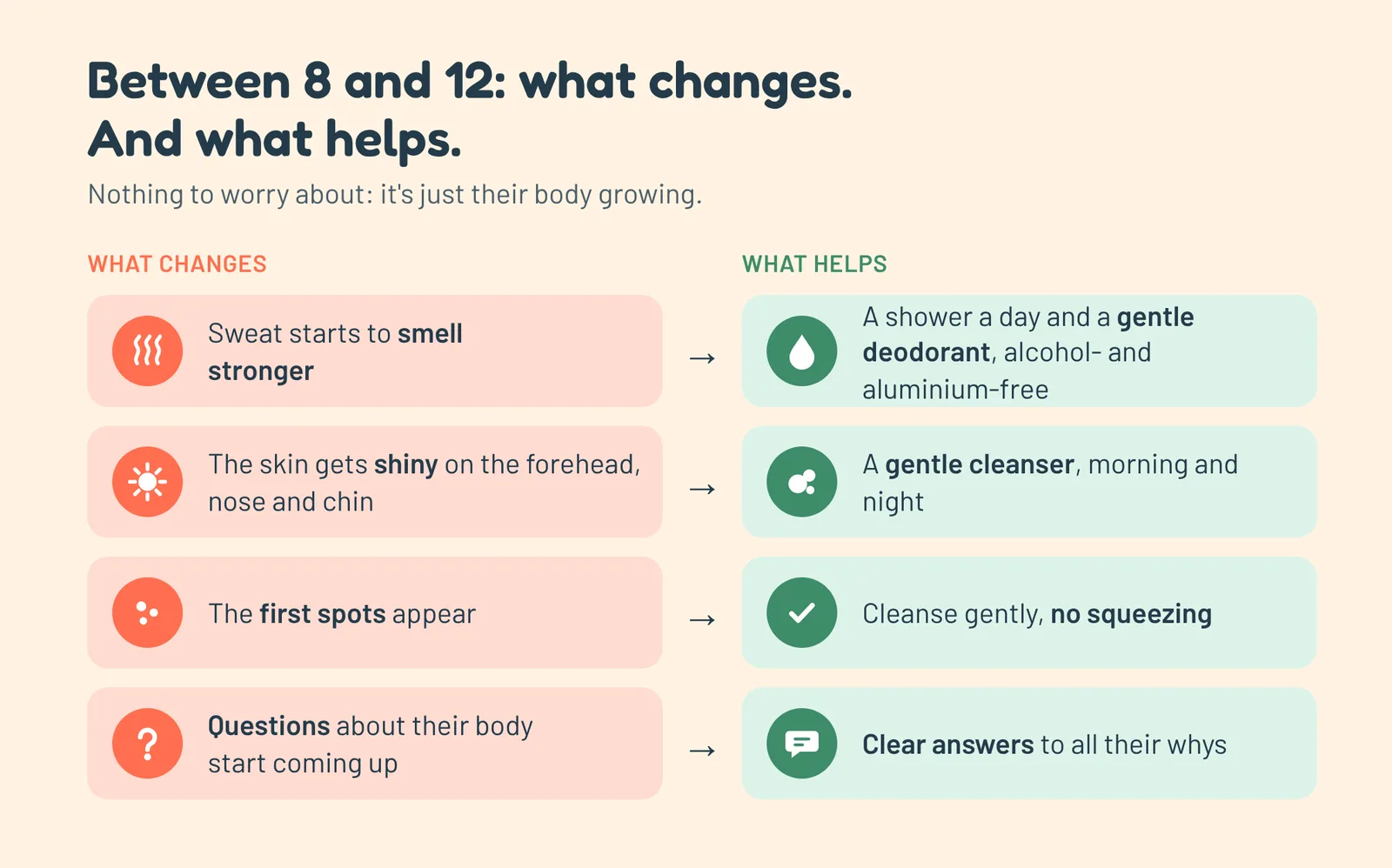
With the first hormones of puberty, three things often change at once. Sweat starts to smell stronger. The skin produces more sebum and gets shiny on the forehead, nose and chin. The first small spots appear.
Nothing to worry about: it's just their body growing. The age at which puberty starts varies from one child to another, and that's normal (the French health insurance service explains these changes, in French). It's also a time when your child is ready to pick up new habits, because they want to feel good, and to feel grown-up.
A routine in three moments, no more
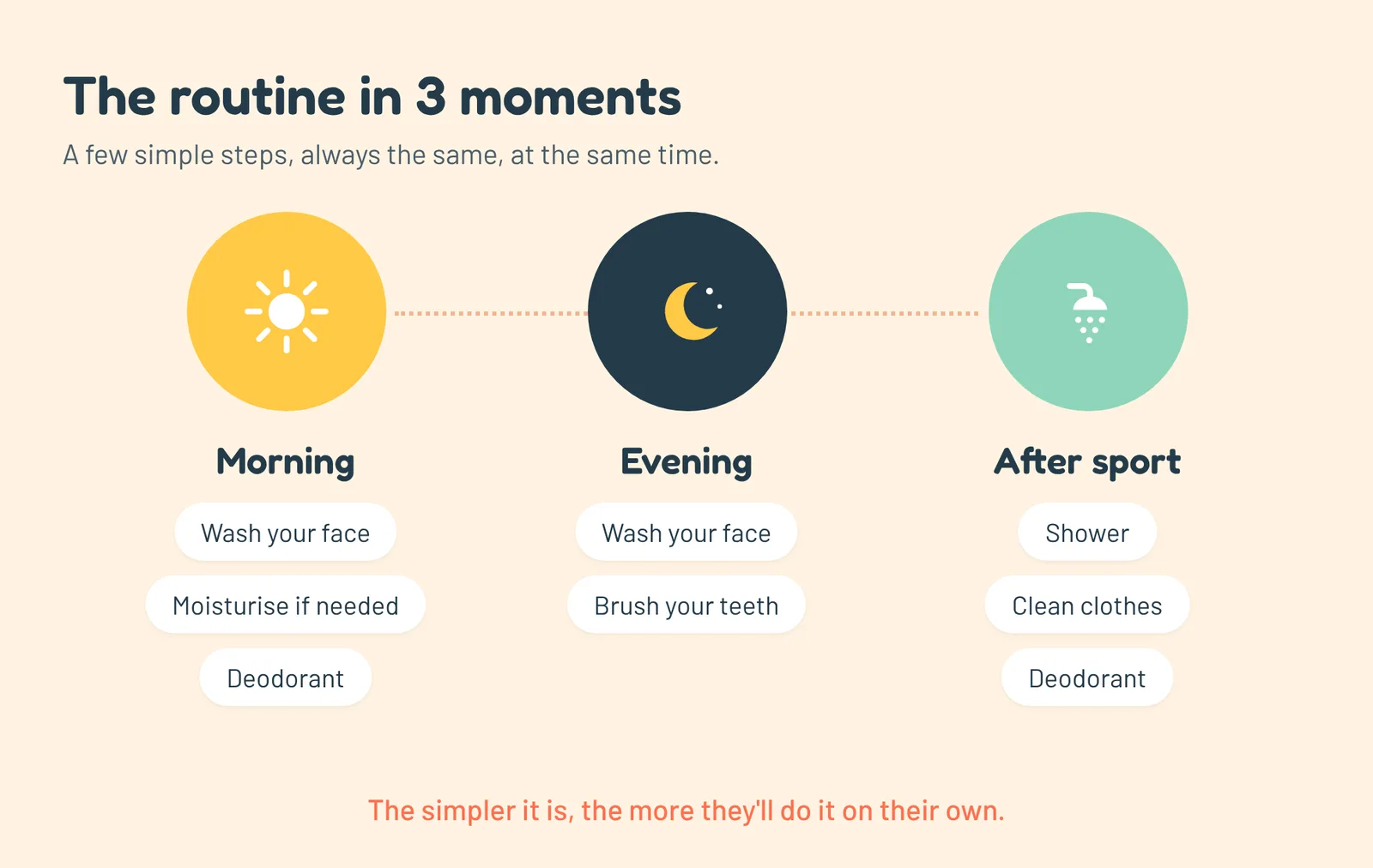
A good first routine comes down to a few simple steps. The simpler it is, the more they'll do it without needing a reminder.
- Morning. A gentle face cleanser, then a light moisturiser if the skin feels tight or looks shiny. A swipe of deodorant on clean, dry underarms, before getting dressed.
- Evening. Wash the face again to remove the dirt of the day.
- After sport. A shower, clean clothes, and deodorant.
On top of that come the habits they already have: brushing their teeth, and washing their hair a little more often if it gets greasy quickly.
Choosing products made for their skin
At 10, their skin is no longer a baby's, but it isn't an adult's yet either. The serums, exfoliants and anti-ageing creams your child may see older kids using are made for adult skin. On theirs, they're more likely to cause irritation.
What to look for:
- gentle formulas, tested on sensitive skin;
- an alcohol-free deodorant, and aluminium-salt-free if that's your preference;
- textures and scents they like: enjoying it is what makes a habit stick.
TOOFRUIT, the brand that thought about this age
TOOFRUIT was born from a parent's observation. In 2011, Katell Perrot was looking for skincare products to help her children, then aged 8 to 10, build good habits before their teenage years. She found brands for babies, others for teenagers, and nothing in between. So she created TOOFRUIT.
Today, the brand offers certified organic products, made in France, tested on sensitive skin and formulated with fruit. It even has a range designed for 8 to 12-year-olds. What we love: products that smell good, that children actually want to use, and that make the routine fun.
To get started, three products are enough:
- Douce Mousse, a coconut-pineapple foaming face cleanser that doesn't sting the eyes.
- So Cool, a moisturising, refreshing gel for combination to oily skin, with pomegranate and blueberry.
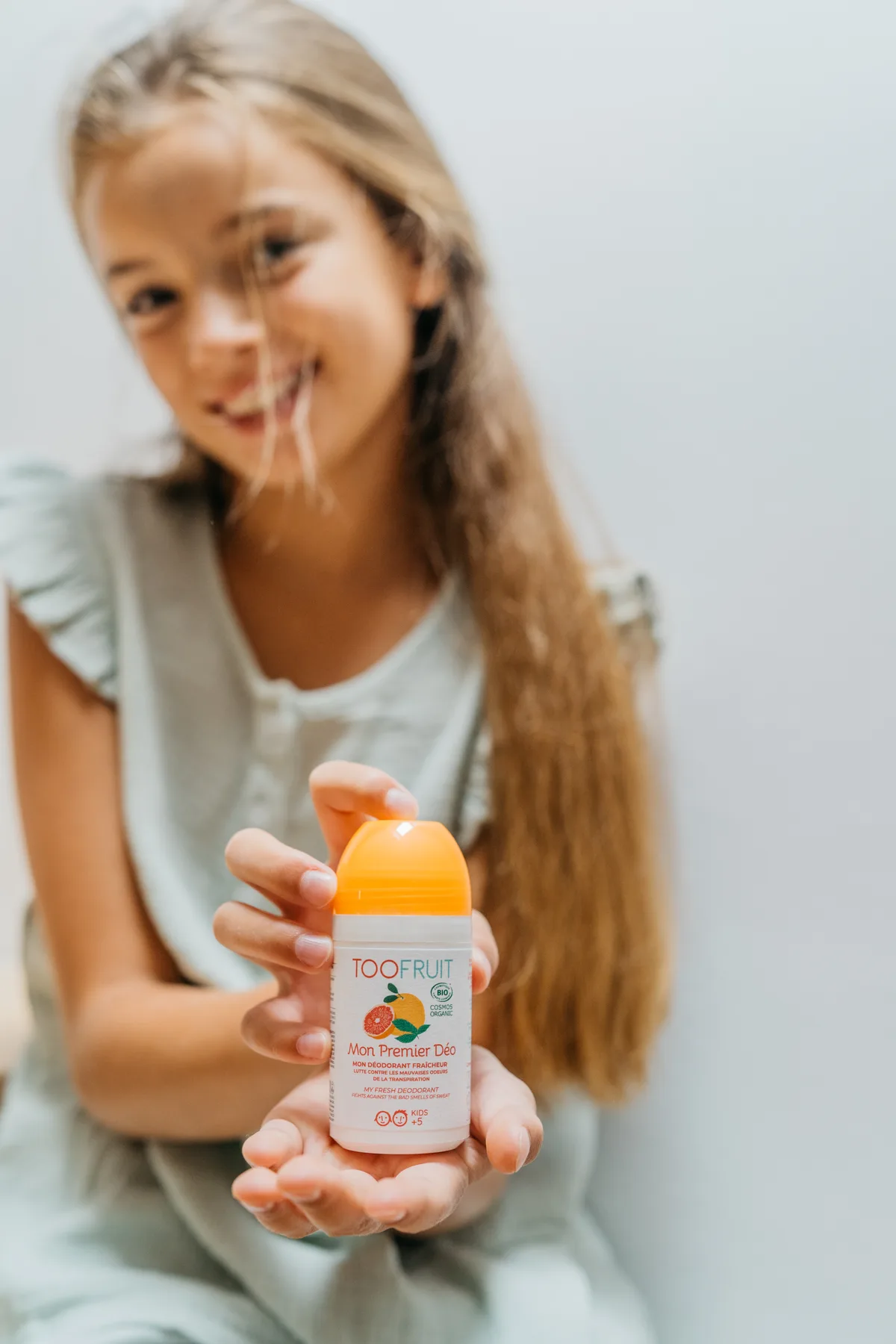
- Mon Premier Déo, an alcohol-free, aluminium-free roll-on, in apple-aloe vera or grapefruit-mint.
All three come together in the Routine pré-ado set, a lovely idea to put on their shelf, or under the tree.
Supporting without imposing
The routine works when it becomes theirs. A few ideas to make that happen:
- Let them choose. The scent of their deodorant, their wash bag, where to keep their products. A product they chose is a product they'll use.
- Show them once, then step back. Do it with them for the first few days, then let them do it alone. It's the same logic as with homework: you support them at first, then you trust them.
- Change your words. "You smell" hurts. "Your body is growing, it needs new kinds of care" reassures.
- Never in front of others. Comments about the body are made one-to-one, never at the dinner table in front of brothers and sisters.
- Notice their efforts. The day they remember their deodorant on their own, tell them. It's something to be proud of.
Above all, answer their whys
A child who understands why they sweat can better understand why deodorant is useful. A child who knows where spots come from can better understand why it's best not to squeeze them. It's as true in the bathroom as it is for learning a lesson: what you've understood, you remember, and you do on your own.
At this age, questions about the body come out of nowhere: "Why does sweat smell?", "Why do I get spots and my friend doesn't?", "What's sebum for?". Some of them you'll hear, others you won't. That's also why Compagnon, the knowledge box for 8 to 15-year-olds, exists: for every why, a clear answer, suited to their age. They understand, and the routine starts to make sense. Personal health questions, though, are best discussed with a parent or a health professional. And their curiosity doesn't stop there: there's plenty to fuel our general knowledge quiz for 8 to 12-year-olds too.
What about first periods?
For girls, puberty also brings their first period, on average around the age of 12 to 13 in France, with wide differences from one girl to another. It's best to talk about it beforehand, and to put together a small kit for their school bag together. TOOFRUIT offers Ma 1ère culotte menstruelle (my first period pants), in organic cotton, designed and made in France with Et Alors, in sizes 10-12 and 12-14 years.
Taking care of yourself is part of growing up
A first routine isn't just about hygiene. It's often the first place where your child decides, on their own, to take care of themselves. A few simple steps, products that smell good, answers to their questions: that's all it takes for them to feel grown-up.