
Why Do Fingernails Keep Growing? Explained to Kids
Compagnon
Why do nails grow back after you cut them? Discover keratin, the nail matrix and other surprising facts about your fingertips.
All it takes is taking the nail clippers out of the drawer for the questions to start pouring in. "Why do they keep growing back?" "Does it hurt to cut them?" "Is it true that nails breathe?" Good news: the tips of our fingers hide a fascinating little factory. Let's take a tour.
First of all, what are nails made of?
A protein called keratin. It's the very same material as our hair, but also a cat's claws, a horse's hooves, or a cow's horns. A nail is actually a very close cousin of a claw.
The part we see is made of dead cells, packed tight and hardened against one another. There are no nerves or blood vessels inside. That's why we can clip them without feeling a thing. On the other hand, if you cut too short, you reach the skin right underneath, which is very much alive—and that stings.
Where is the nail factory hiding?
Under the skin, at the base of the nail, right behind the cuticle. This area is called the matrix. It constantly produces new cells, pushing the older ones forward, much like a conveyor belt.
The little white crescent you see at the base of some nails is the lunula: the visible tip of the matrix poking out. That's also why a bump to the base of your nail can leave a mark that takes months to disappear. It slowly moves forward with the nail, until the day you clip it off.
Why do they never stop growing?
Because our hands never stop either. We grab, scratch, type, open, carry. Nails wear down, break, and chip. By constantly renewing themselves, they are always there to protect our fingertips.
And they grow at different speeds:
- fingernails grow about 3 millimeters per month;
- toenails grow about twice as slowly;
- a fingernail renews itself completely in about six months, while a big toenail can take over a year.
They also grow faster when we're young, when it's warm outside, and usually on the hand we use the most.
A little challenge for curious minds: put a tiny dot of nail polish on a nail, right above the cuticle. Then watch it move forward week after week. How long will it take to reach the tip?
By the way, what are our nails actually for?
Far more things than you might think.
- Protecting the tips of our fingers and toes, which take a lot of bumps and knocks.
- Picking up tiny things: a crumb, a splinter, the edge of a sticker.
- Scratching, of course.
- Feeling things better. When we touch something, the nail acts as a rigid backing behind the pad of the finger. The result: our sense of touch is much more precise.
This is actually a unique feature of primates. Monkeys and apes, just like us, have flat nails rather than claws, because their hands are built for grasping.
True or false: the questions that always come up
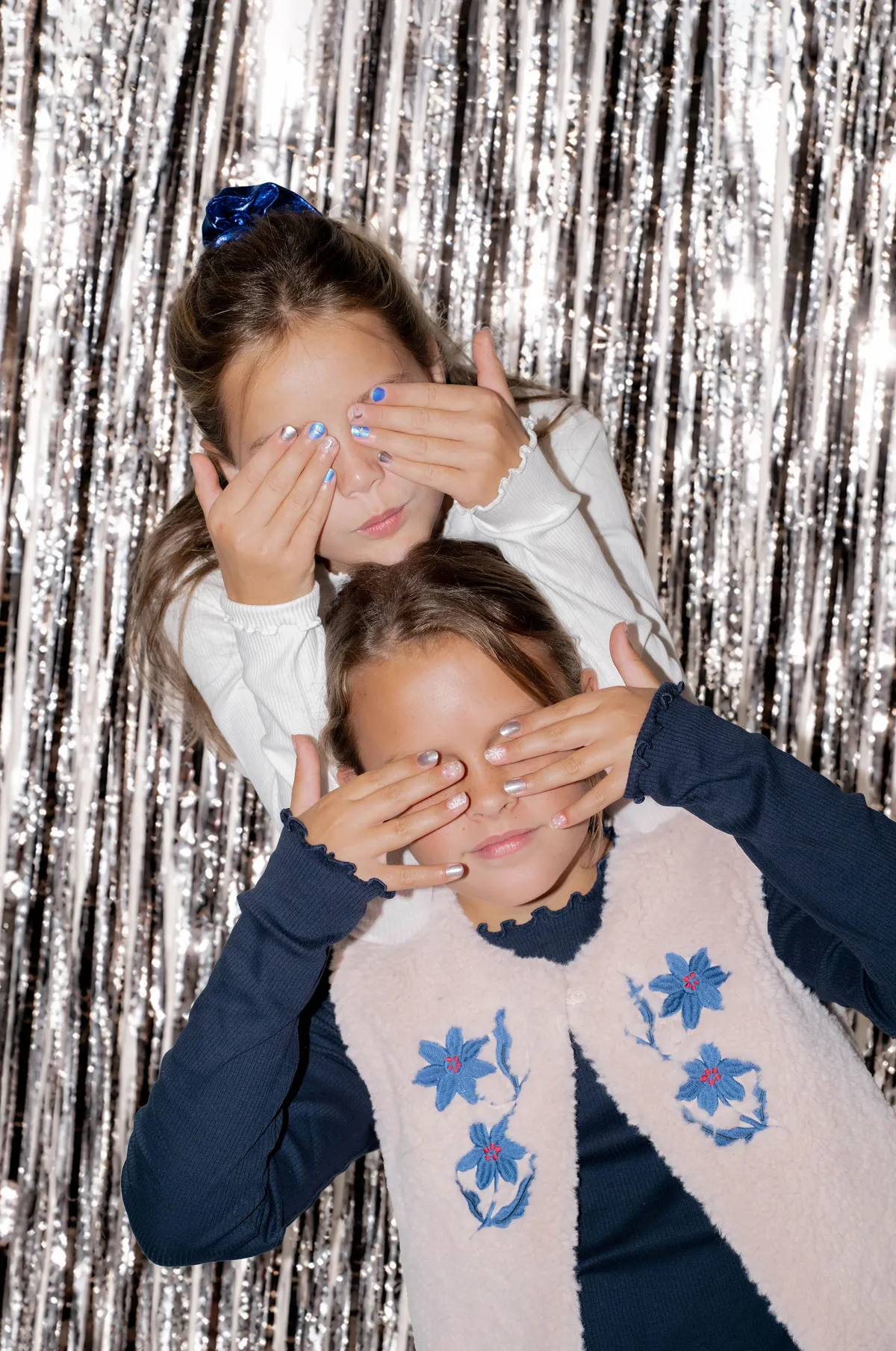
"Nails need to breathe." False. Nails don't take oxygen from the air. Everything they need arrives through the bloodstream, thanks to the living skin underneath. So nail polish won't suffocate them. Taking a break every once in a while and gently removing polish with an acetone-free remover like the one from Yaka is still a great habit to keep nails healthy.
"White spots mean a lack of calcium." False, in the vast majority of cases. They are usually marks from minor bumps to the matrix, which then grow out along with the nail.
"Nails keep growing after you die." False. It's actually the surrounding skin drying out and shrinking back, which makes it look like the nails have gotten longer.
"Nails grow faster in the summer." Mostly true. Warmth and improved blood circulation speed up the process a little.
Ten tiny canvases at your fingertips
A tiny canvas that renews itself and can be transformed, wiped clean, and started over endlessly: nails are also a wonderful playground for creativity.
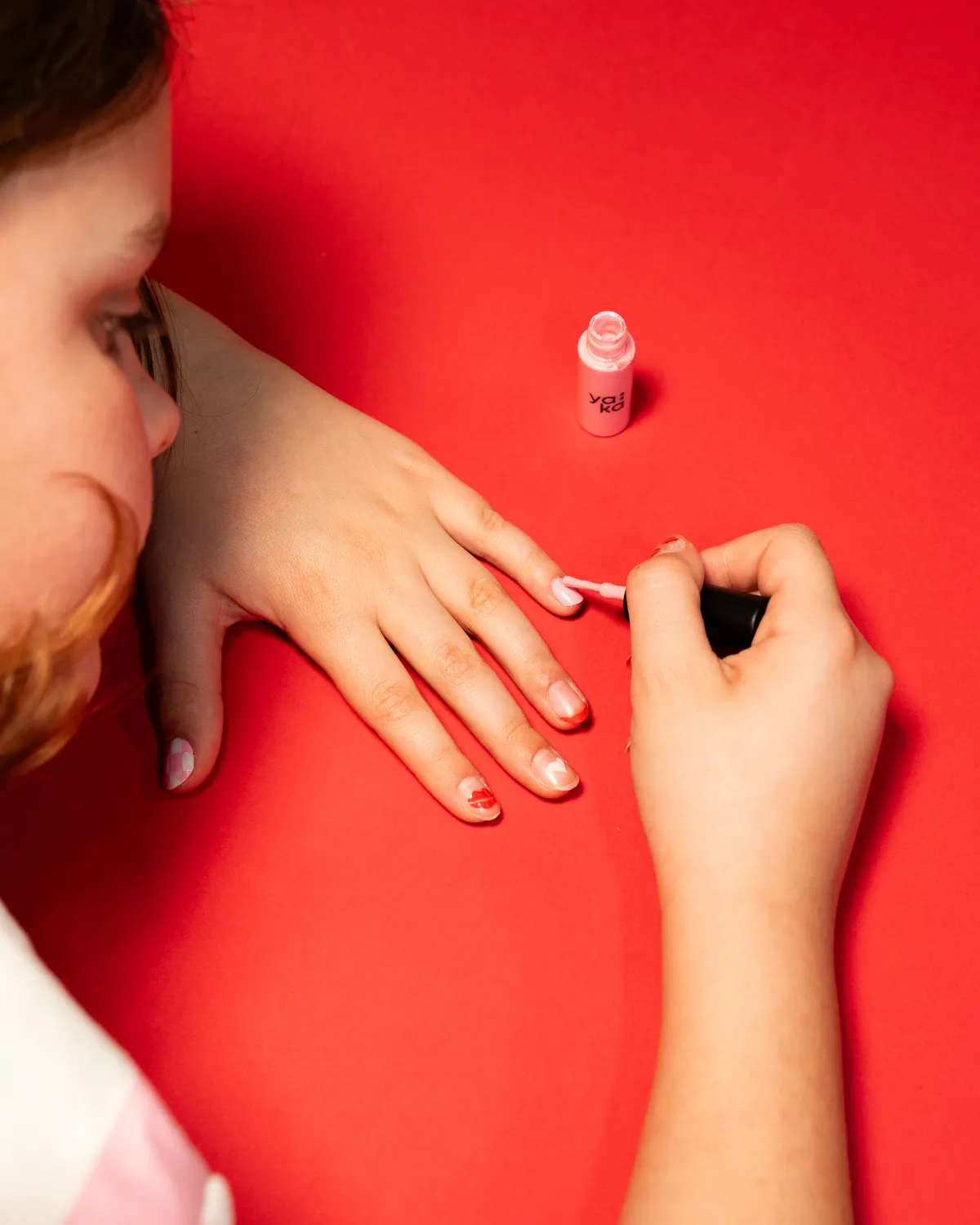
That's exactly what inspired Yaka Paris. The brand designed a 2-in-1 nail polish: a brush on one side for solid coats, and a fine pen on the other for details. Stripes, polka dots, flowers, leopard print... even beginners can draw whatever comes to mind. The polishes are made in France, vegan, and formulated with at least 78% natural-origin ingredients.
To get started, there are nail art kits with beautifully coordinated shades, and step-by-step tutorials for inspiration. On a Wednesday afternoon, a holiday evening, between sisters, friends, or with a parent: it's the kind of moment where you chat, make mistakes, laugh, and try again.
Before bringing out the colors, a quick trip to the sink is a must. Plenty of germs hide under our nails, and we owe that discovery to a doctor whose story we share here.
One question always leads to another
And if hair is made of the same material, why does it grow so much faster? And why can cats retract their claws while we can't? Children's questions never really stop—much like their nails.
For all the questions that pop up tonight, tomorrow, or ten years from now, there's Compagnon! For every "why," an answer.